

Congratulations to our 2026
transportation group Award Winners
conference paper that best aligns with the theme sponsored by BECA
& Best Young Author
sponsored by nb consulting
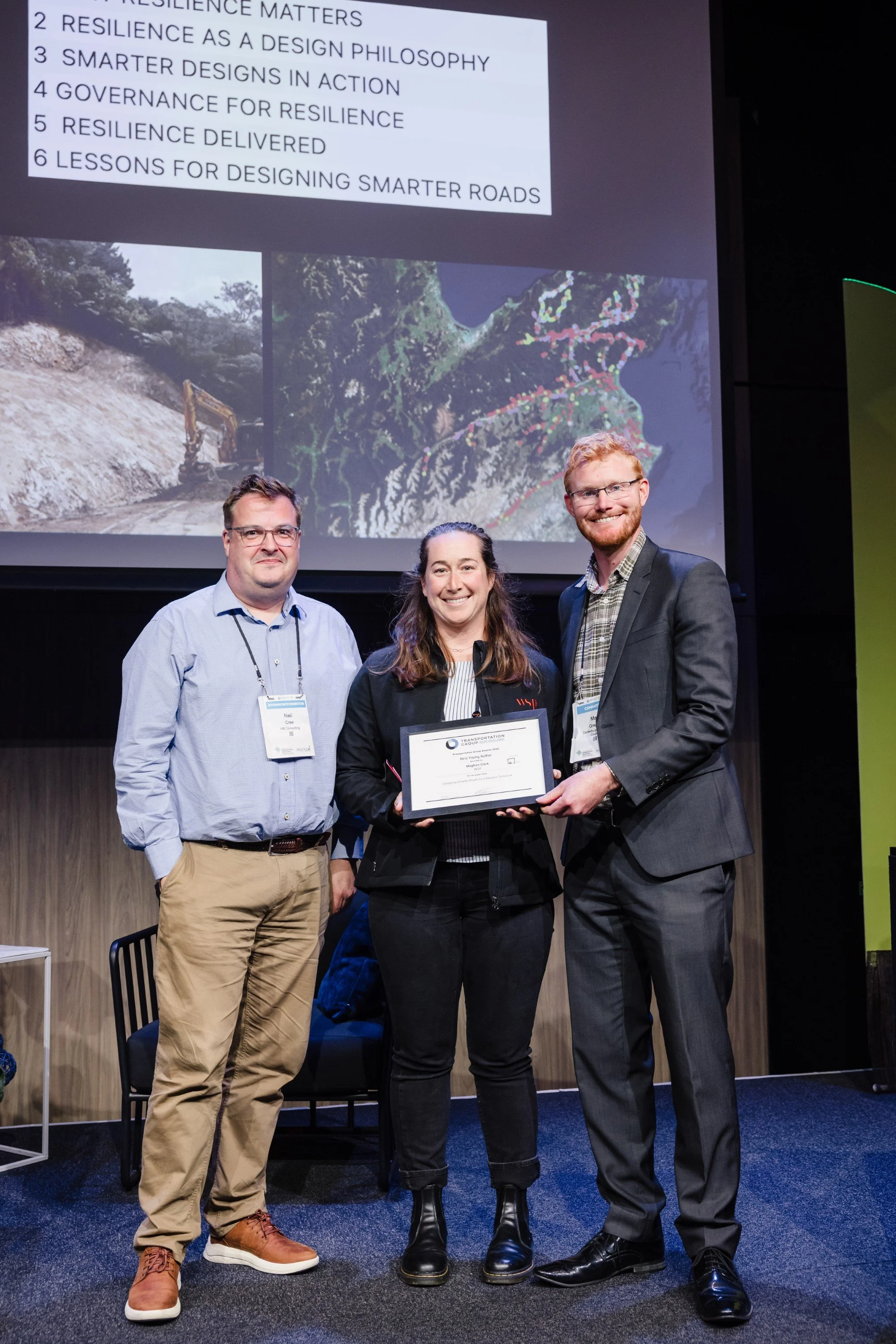
Meghan Clark, WSP
Designing Smarter Roads for a Resilient Tomorrow
“This paper is really helpful to other districts who may be faced with recovering from natural disasters. It clearly documents Marlborough’s recovery journey offering a powerful set of lessons accessible to a broad audience.”
highly commended think piece paper
sponsored by beca
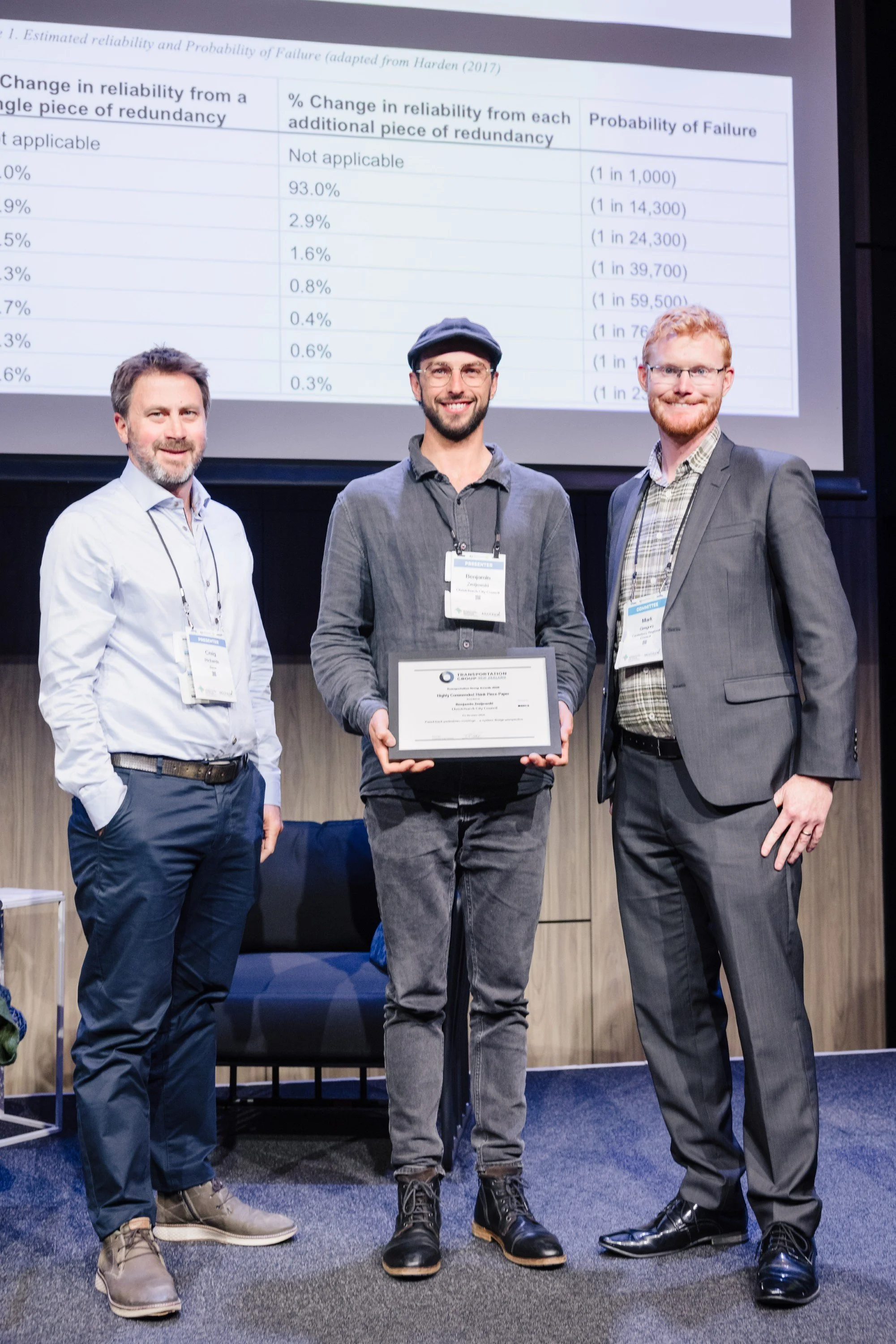
Benjamin Zmijewski, Christchurch City Council
Pared-back pedestrian crossings – a system design perspective
“This is a topic that has been studied from multiple angles over the years but here is a road map to low-cost action. Let's hope the regulatory boffins read this one”
best think piece paper
sponsored by beca
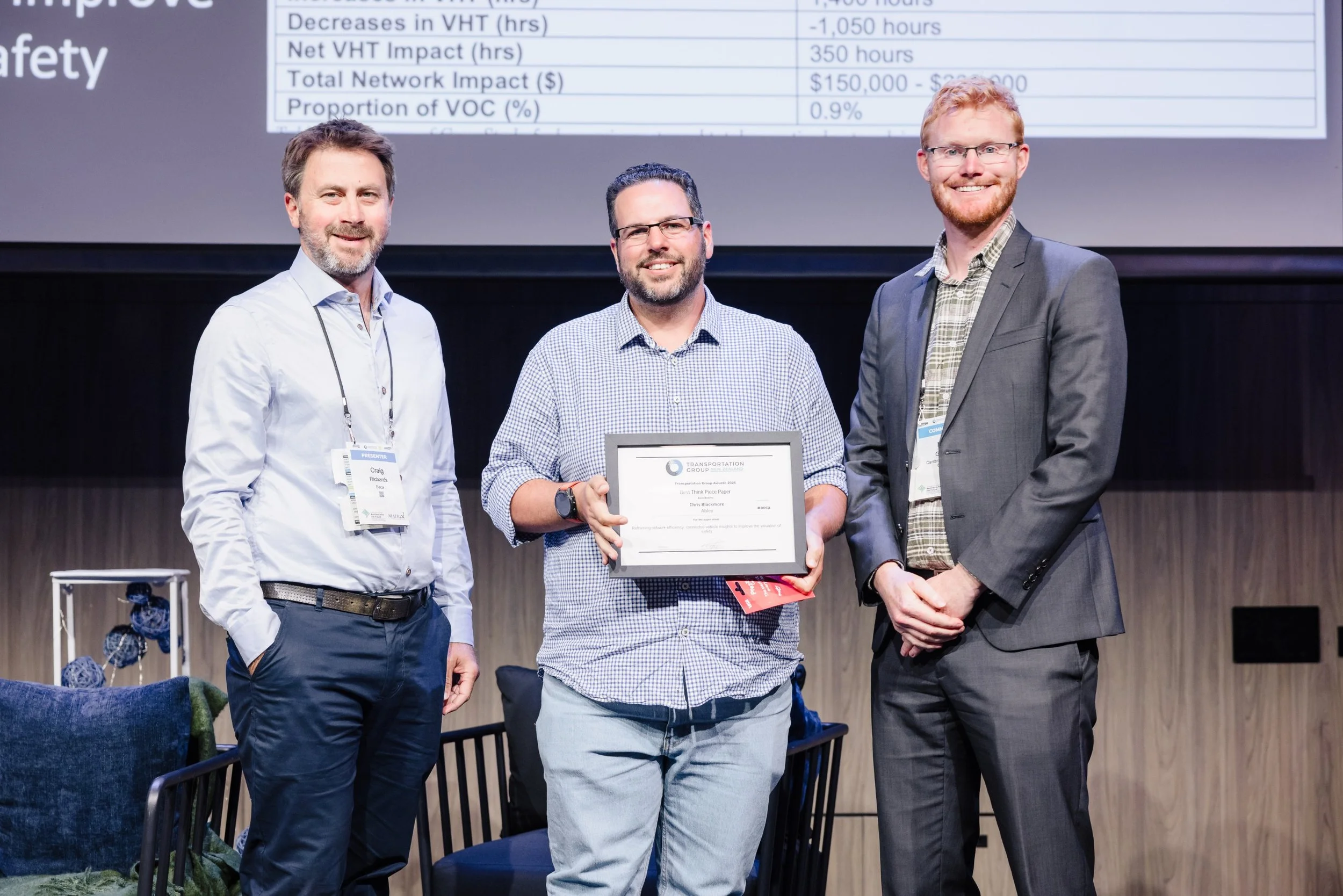
Chris Blackmore, Abley
Reframing network efficiency: connected vehicle insights to improve the valuation of safety
“Quantifying the network efficiency impacts and costs of crashes is a valuable contribution to our practice and helps expand the potential to treat safety through the economic lens that currently takes priority in the GPS.”
highly commended practice paper
sponsored by beca
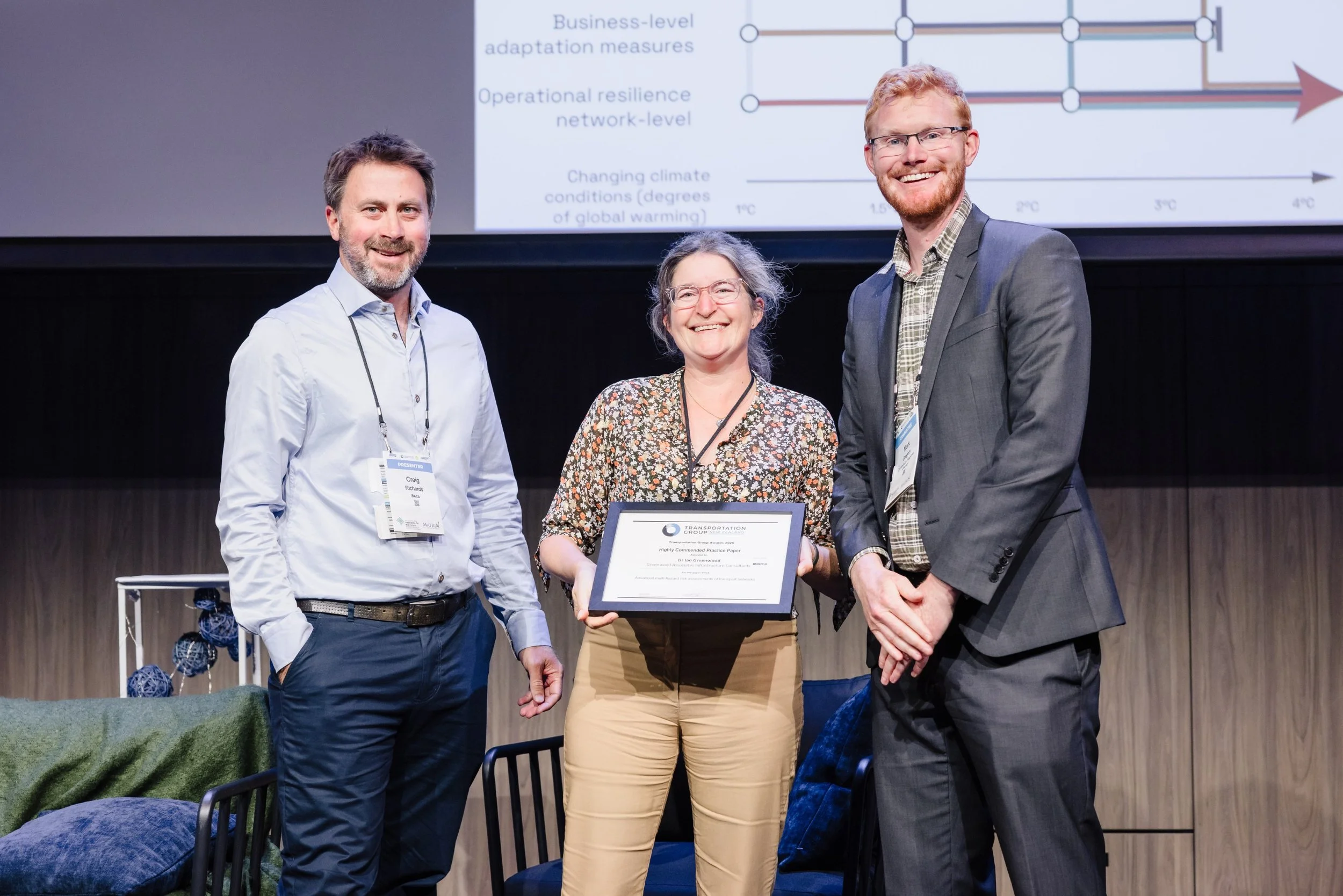
Accepted on behalf of… Dr Ian Greenwood, Greenwood Associates Infrastructure Consultants
Advanced multi-hazard risk assessments of transport networks
“The innovative multi-hazard assessment of three geographically and contextually diverse countries illustrates transferability. The paper provides tangible outcomes — influencing standards, prioritisation, and asset management — rather than stopping at analysis.”
best practice paper
sponsored by nb consulting
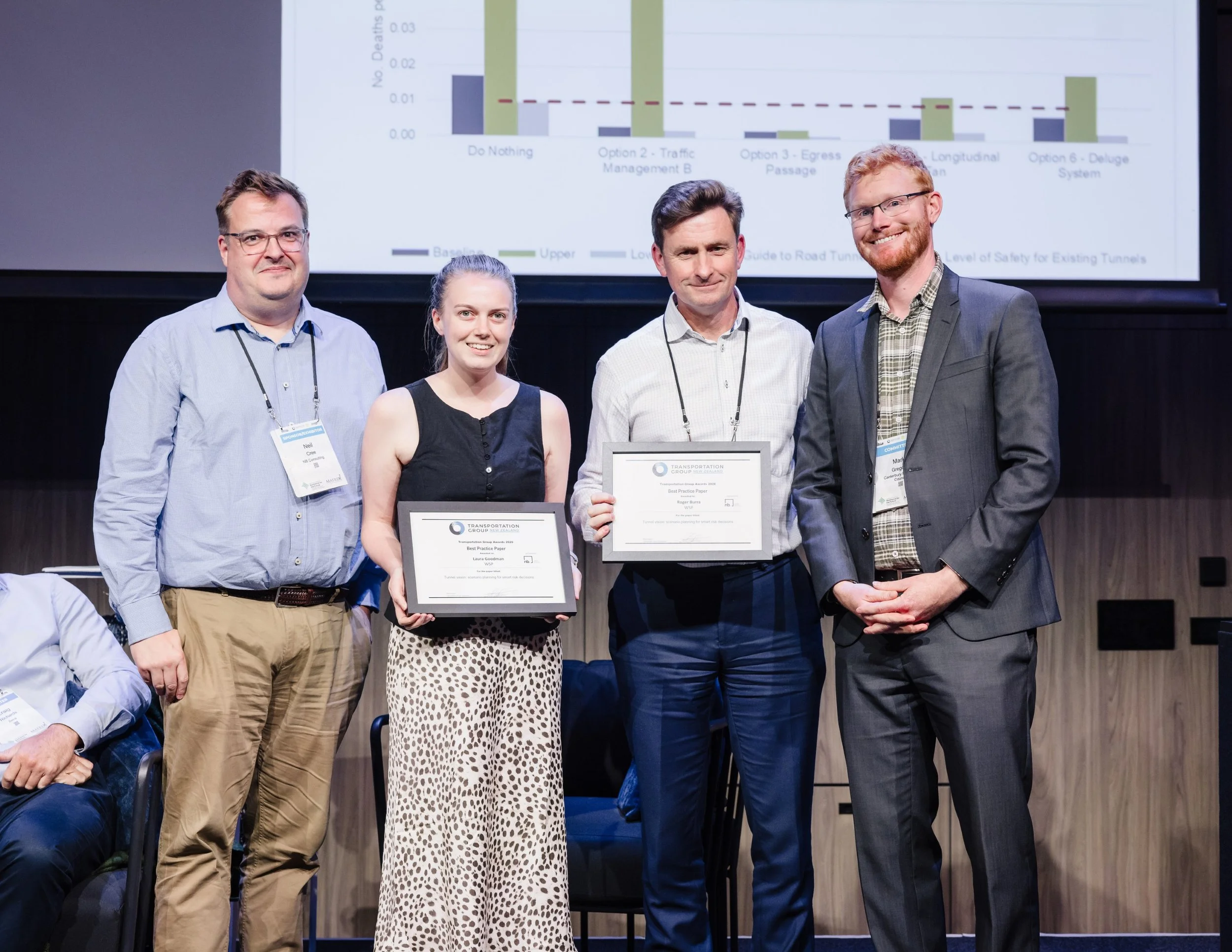
Roger Burra & Laura Goodman, WSP
Tunnel vision: scenario planning for smart risk decisions
“This paper offers pragmatic, transferable guidance on developing and assessing future demand scenarios — in this case for the Homer Tunnel. The scenario-based approach to resilience planning is readily applicable to any major destination or network risk node or link, and the use of quantitative risk assessment strengthens confidence in the recommendations by benchmarking against comparable risks across the NZTA network.“
highly commended research paper
sponsored by BECA
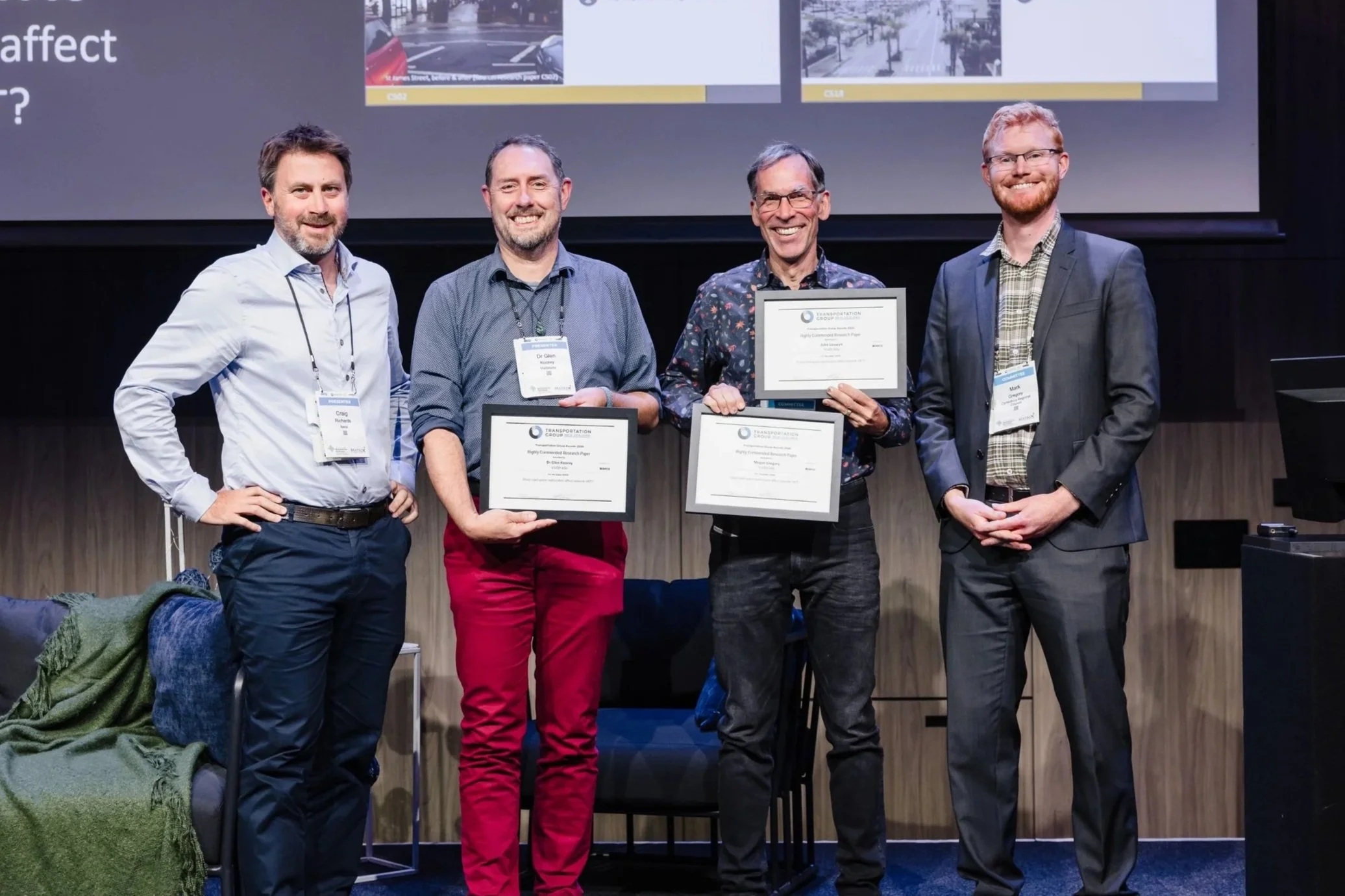
Dr Glen Koorey, John Lieswyn & Megan Gregory, ViaStrada
Does road-space reallocation affect network VKT
“A topic of live policy debate and having practical utility on urban streets now”
best research paper
sponsored by sidra solutions
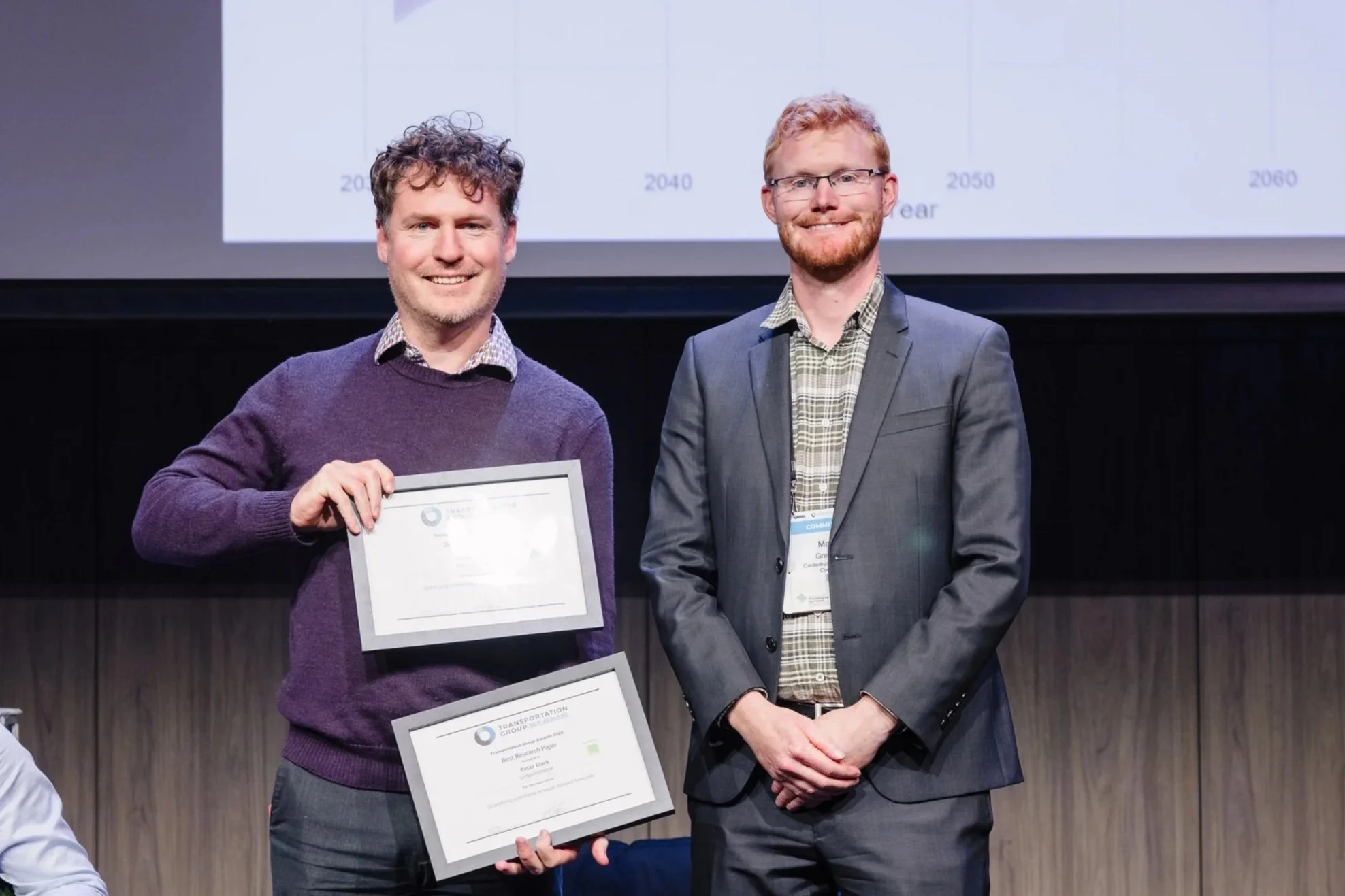
Stuart Donovan & Peter Clark, Motu Research
Quantifying uncertainty in travel demand forecasts
“Judges felt that Stuart Donovan & Peter Clark's research is outstanding, it is a crucial issue affecting the allocation of scarce resources especially in a constrained and increasingly volatile natural world.”
Best conference paper
sponsored by aa
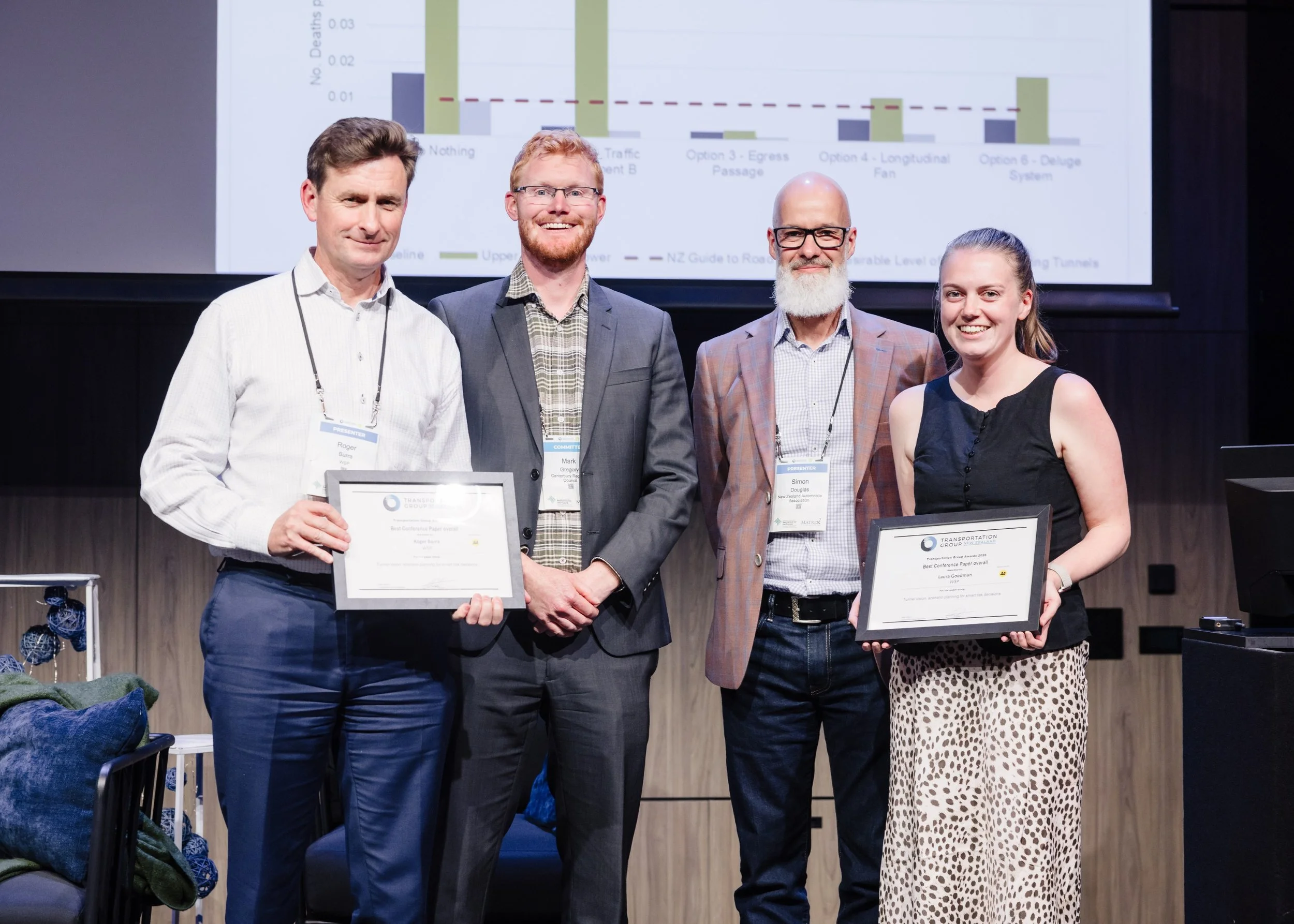
Roger Burra & Laura Goodman, WSP
Tunnel vision: scenario planning for smart risk decisions
“Burra & Goodman's work is very high quality quantitative risk assessment and just edges out Clark's work to summarise lessons learned in Marlborough storm recovery.
On the scholarly side, Donovan's uncertainty work was judged equal in rigour to that of Davis's on-demand pooled ride simulation. In terms of policy relevance, Blackmore's work on network disruption costs of crashes is very useful. It was a very hard decision.”
Best CONTRIBUTOR TO ROUNDABOUT
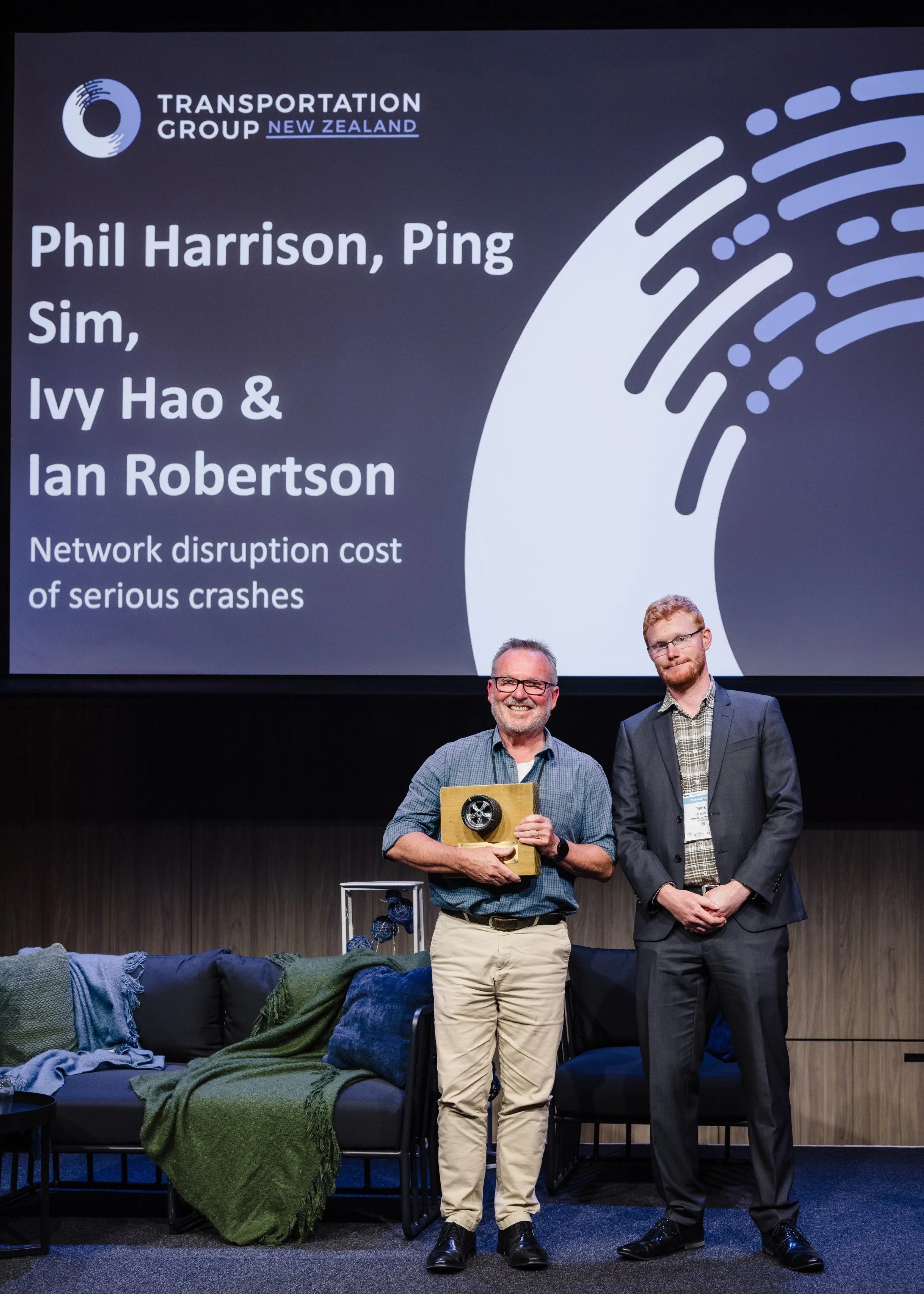
Phil Harrison, Ping Sim, Ivy Hao & Ian Robertson
Network disruption cost of serious crashes
“This award goes to the best contribution to the Transportation Group’s ‘Roundabout’ magazine in the 2025 calendar year. It also covers the 2024 calendar year, because we didn’t bother doing it that year.
We trawl through all the articles provided by our local professionals to Roundabout over the year and choose the best one. They get this amazing wooden-slash-plastic trophy, engraved with their name, which they need to somehow fit into their luggage home and also bring back next year.
For this particular award, the winner doesn’t even know that they submitted an article. The editor – sitting smugly in the audience right now – found their work and wrote it up as an article. So perhaps the editor should win it. No. That would be wrong. Should we put it to a vote? No, you are right, that would be wrong.
The winning article this year was written by four people, but only one of them seems to be at the conference, so we are just going to give it to him. Phil Harrison, please wake up, this one is for you. The article was called “Network disruption cost of serious crashes” and looked into the broader costs of crashes that might arise from higher speeds, and how that might offset that the benefits of travel time savings. Absolutely hilarious. Seriously, you should read it.”
Congratulations to the below other winners:
transportation group nz tertiary study grant 2026
Nathan Bailey Roller Compacted Concrete and Qihan Zhong Inductive Power Transfer Roadway Pavement
“Bailey’s work is supported by a strong relationship from Tauranga City Council and contractors, and the outputs are expected to be sector ready guidance that can be implemented immediately.
Qihan’s work combines multiple aspects of transport: sustainability, fleet composition, EV charging (fuel) and pavement design. While dependent on manufacturers and therefore long-term, her research is potentially very impactful at a system level.”
transportation group nz research grant 2026
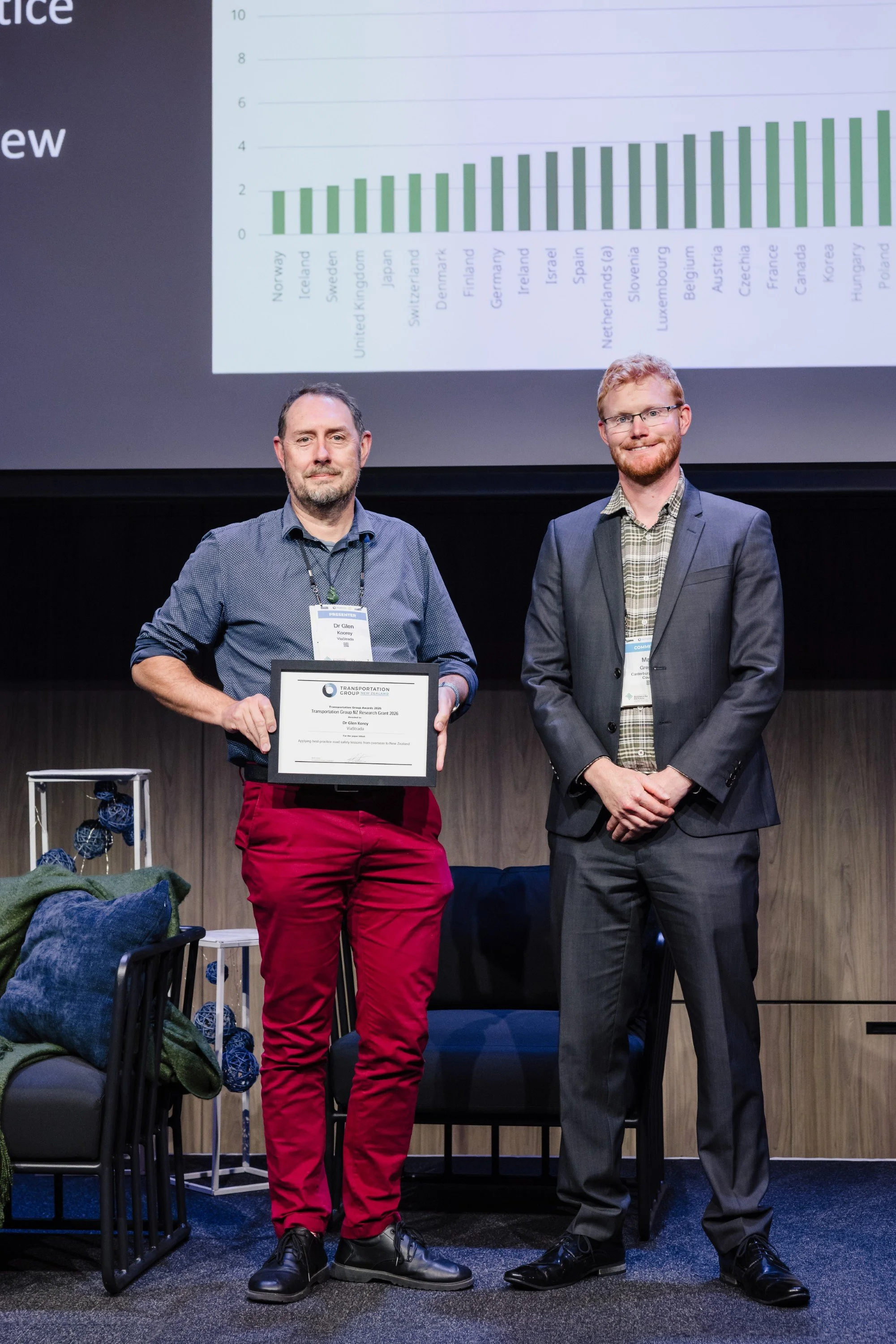
Dr Glen Koorey, ViaStrada
Applying best-practice road safety lessons from overseas to New Zealand
“The judges were unanimous that Glen’s proposed research is highly relevant and timely as New Zealand can learn more from others around the world on policy implementation and the user acceptance side of road safety to significantly improve NZ road and transport indicators.”
best student
sponsored by sidra solutions
Absent from award ceremony were the following winners:
Cameron Davis, University of Canterbury
On-demand pooling in Christchurch: benefit or bane?
“Also the winner of TG’s last $10,000 student grant. Technically rigorous and innovative, Davis's work indicates that on-demand services may promote smoother traffic flow and increase the effective capacity range of the network, potentially reducing congestion during peak periods”